
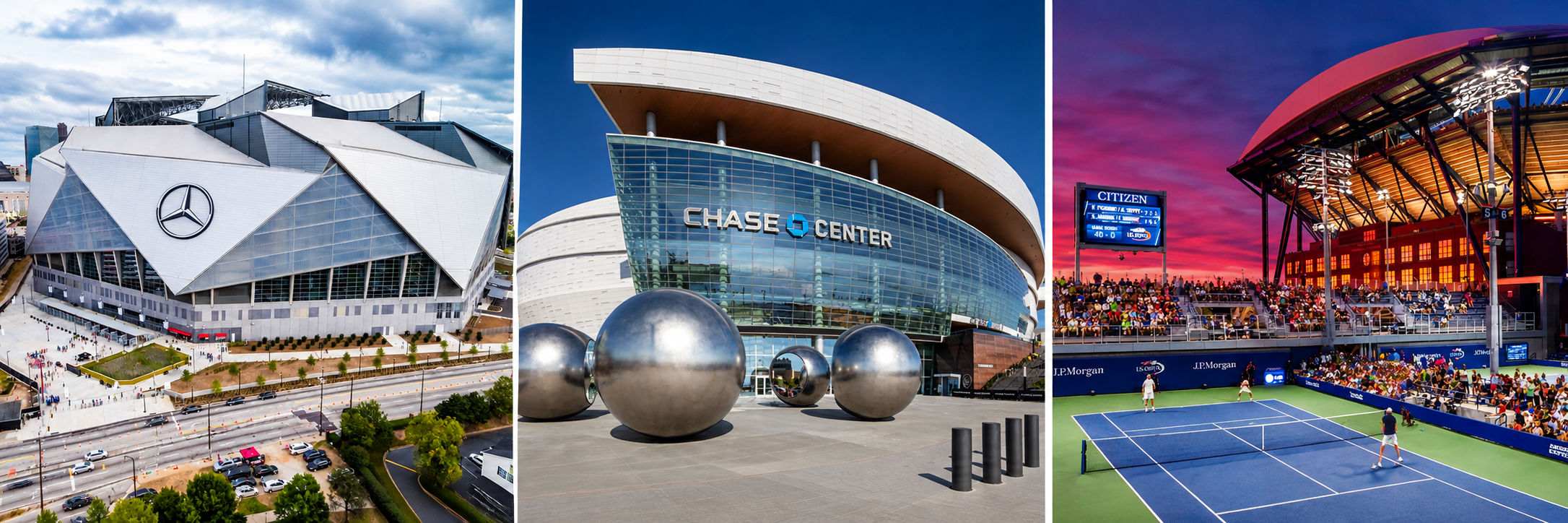
It may only take a few years to design a stadium, but it must perform for decades. From distinctive metal facades to signature team colors, architectural finishes help define a sports venue’s identity. Selecting high-performance stadium coatings helps preserve that design while protecting building materials from environmental exposure.
For architects and builders, LUMIFLON® fluoroethylene vinyl ether (FEVE) resins offer long-term weatherability, sustained color and gloss and long recoat intervals. For coating formulators, they offer formulation flexibility. These coatings have demonstrated more than 20 years of outdoor performance, and properly formulated systems can meet AAMA 2605 requirements.
Projects such as Arthur Ashe Stadium, Chase Center and Mercedes-Benz Stadium demonstrate their use in new construction and renovations.
What Performance Requirements Should Stadium Coatings Meet?
Stadiums and arenas incorporate extensive areas of metal panels, structural steel, roofing and decorative elements. Exterior surfaces are exposed to UV radiation, moisture, temperature fluctuations and airborne contaminants that can cause coating deterioration.
A high-performance stadium coating should provide:
- Color and gloss retention: Resist fading, chalking and gloss loss to maintain the intended appearance.
- Long-term weatherability: Withstand prolonged exposure to sunlight, moisture and changing temperatures.
- Design flexibility: Accommodate vibrant colors, metallic finishes, natural-looking textures and a range of gloss levels.
- Life-cycle value: Extend maintenance intervals and reduce the frequency of recoating.
- Substrate protection: Work within a properly designed coating system to protect metal surfaces against environmental degradation.
LUMIFLON FEVE resins provide a foundation for coating systems designed to meet these performance requirements across a range of architectural applications.
How Do LUMIFLON-Based Coatings Meet AAMA 2605 Requirements?
For architectural aluminum components, AAMA 2605 provides a recognized benchmark for coating performance. AAMA 2605 is the most demanding of the AAMA 2603, 2604 and 2605 specifications for factory-applied organic coatings on architectural aluminum extrusions and panels. It establishes requirements for color retention, gloss retention, chalk resistance, adhesion, corrosion resistance and weatherability.
One of its key requirements involves 10 years of outdoor exposure in South Florida, where intense sunlight, heat and humidity challenge coating durability. Properly formulated and tested LUMIFLON-based systems can meet AAMA 2605 requirements while supporting a broad range of architectural colors and finishes.
For coating formulators, the specification provides measurable performance criteria for developing and evaluating coating systems. Architects and specifiers can use these requirements to establish expectations for long-term appearance and durability.
AAMA 2605 applies specifically to factory-applied finishes on architectural aluminum. Coatings for structural steel, existing roofs and other substrates require performance specifications appropriate to their applications.
Stadium Coatings for Renovation and Color Restoration
Renovating existing stadiums and arenas requires coatings that protect aging surfaces while preserving distinctive architectural finishes. Depending on the formulation, FEVE-based coatings can be applied at ambient temperatures, making them suitable for certain field-applied restoration projects. Three projects demonstrate how LUMIFLON-based coatings are used in stadium renovations:
Arthur Ashe Stadium: Restoring a Distinctive Blue Finish
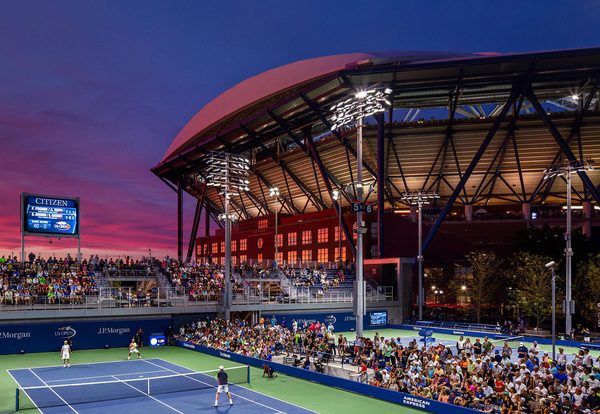
At Arthur Ashe Stadium in Queens, New York, the polyurethane topcoat on structural columns supporting the retractable roof began fading within a year of installation. Over six years, the original dark blue finish deteriorated to a pale blue, nearly white appearance.
Following an evaluation of the existing coating, Tnemec recommended a fluoropolymer topcoat formulated with LUMIFLON resins. The restoration involved cleaning the surfaces and applying the new finish over the existing polyurethane coating, avoiding complete removal of the original coating system.
The FEVE-based topcoat was selected for its UV resistance and long-term color and gloss retention. Read the Arthur Ashe Stadium case study.
Hoover Metropolitan Stadium: Protecting a Custom Blue Roof
Hoover Metropolitan Stadium in Alabama underwent a roof renovation in 2024 to address aging surfaces, chalking and delamination. The project introduced a custom
color known as Hoover Blue. Following surface preparation and application of an epoxy primer, contractors applied two coats of Induron Perma-Gloss Fluorourethane formulated with LUMIFLON resins.
The coating system provides weather resistance while helping preserve the roof’s distinctive appearance. Learn more about the Hoover Metropolitan Stadium renovation.
The Forum: Restoring a Historic Arena’s Red Exterior
The Forum in Inglewood, California, opened in 1967 and became a landmark sports and entertainment venue. During a major renovation, contractors removed deteriorated coatings from the building’s galvanized steel panels and applied a protective system consisting of epoxy primers and Tnemec Series 1071V Fluoronar, formulated with LUMIFLON resins.
The system restored the arena’s signature red appearance while providing UV resistance and long-term color and gloss retention. These coatings can support architectural preservation without replacing existing metal components. Read More.
Design Flexibility: Wood-Look, Metallic and Custom Stadium Finishes
Stadium coating selection also influences the range of finishes available to architects. LUMIFLON resins can be formulated in a variety of colors, gloss levels and decorative effects. Depending on the formulation, they can be used in clear or pigmented coatings for factory-applied or field-applied systems.
This versatility supports architectural designs that incorporate metallic surfaces, wood-look finishes and other distinctive visual treatments.
Chase Center: Combining Wood-Look Finishes with Durability
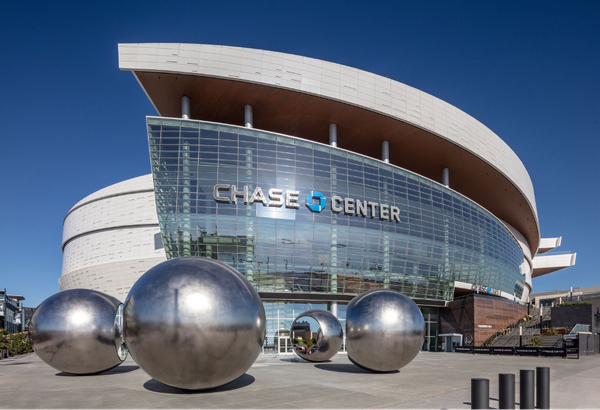
The Chase Center in San Francisco, home of the Golden State Warriors, features metal panels with a Mission Grain wood-look finish. Designed through a collaboration involving Gensler, MANICA Architecture and Kendall/Heaton Associates, the LEED Gold-certified arena incorporates Pure + Freeform panels using FEVE resin technology.
The coating provides the clarity needed to preserve the decorative finish while offering resistance to UV radiation and environmental exposure. The project demonstrates how coating technology can support natural-looking architectural finishes on metal substrates. More about the Chase Center project.
Footprint Center: Creating a Contemporary Metallic Aesthetic
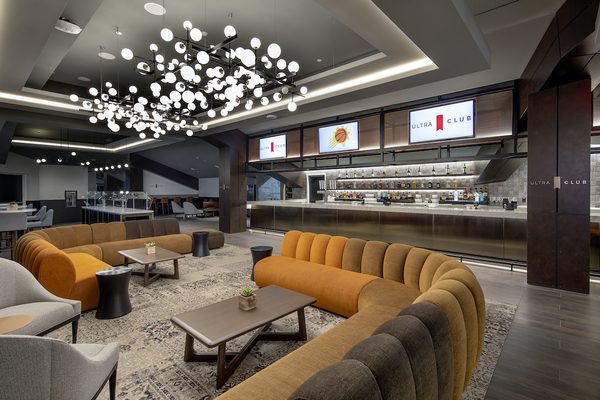
The Footprint Center in Phoenix, home of the Phoenix Suns, underwent a $230 million renovation designed by HOK. The redesigned interior incorporates decorative metal column covers, ceiling beams and millwork supplied by Pure + Freeform. These elements feature a textured bronze finish incorporating LUMIFLON resins. These coatings can be used to achieve sophisticated metallic finishes for arena interiors and hospitality spaces. More about the Footprint Center renovation.
U.S. Bank Stadium: Preserving Custom Metal Finishes
U.S. Bank Stadium in Minneapolis features metal soffits and wing walls with a custom rust-copper appearance. Designed by HKS Architects, the metal elements were developed by Pure + Freeform, fabricated by MG McGrath and prefinished with LUMIFLON-based coatings. The coating system helps protect the distinctive finish against weathering while supporting the building’s architectural design. Read more about the U.S. Bank Stadium project.
Supporting Sustainable Stadium Design and Lower Life-Cycle Costs
Maintaining large stadiums and arenas can require extensive labor, specialized access equipment and interruptions to facility operations. Durable FEVE-based coatings can extend maintenance intervals, reducing the need for frequent recoating and associated material and labor costs.
Longer-lasting finishes can also support sustainable building practices by reducing material consumption over time. However, coating selection alone does not determine LEED certification.
Mercedes-Benz Stadium: Coatings for a LEED Platinum Venue
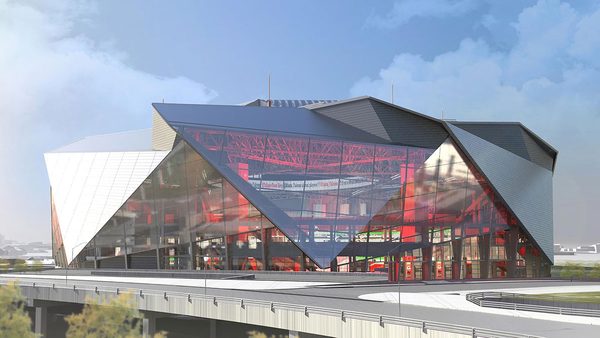
Mercedes-Benz Stadium in Atlanta, designed by HOK, became the first professional sports stadium in North America to achieve LEED Platinum certification. The stadium’s distinctive exterior incorporates ALPOLIC metal composite panels with LUMIFLON-based coatings on portions of the facade. The coating technology supports the long-term appearance and durability of these architectural elements. Read about Mercedes-Benz Stadium.
What Should Architects and Coating Formulators Consider When Specifying Stadium Coatings?
Selecting a stadium coating requires balancing architectural appearance, substrate requirements, environmental exposure and application conditions. Key specification considerations include:
- Exposure conditions: Evaluate UV intensity, moisture, temperature cycling, airborne contaminants and corrosion risks.
- Substrate compatibility: Identify the requirements of aluminum, galvanized steel, structural steel, metal composite panels and existing finishes.
- Performance standards: Specify AAMA 2605 where applicable and establish appropriate requirements for other substrates.
- Finish characteristics: Define color, gloss, texture, metallic effects and acceptable appearance changes over time.
- Coating system design: Select compatible primers, intermediate coats and topcoats based on the substrate and service environment.
- Application and curing: Determine whether factory finishing or ambient-temperature field application is appropriate.
- Maintenance expectations: Evaluate anticipated service life, inspection requirements and future recoating access.
For coating formulators, resin selection must also account for pigment compatibility, adhesion, curing chemistry and the performance of the complete coating system.
LUMIFLON FEVE resins provide formulation flexibility for developing coatings that address these technical and aesthetic requirements.
Protecting Stadium Design Intent for Decades
LUMIFLON FEVE resins give architects and coating formulators options for developing durable stadium coatings with a wide range of architectural finishes. Whether specifying coatings for new construction or renovation, selecting the right formulation and coating system is essential for long-term performance. Contact AGC Chemicals Americas to learn how LUMIFLON resins can support your next stadium or arena coating project.
Frequently Asked Questions About Stadium Coatings
What types of coatings are used on stadium exteriors?
Stadium exteriors may use fluoropolymer, polyurethane and other protective coating systems, depending on the substrate and exposure conditions. FEVE-based fluoropolymer coatings are used where long-term weatherability, color retention and design flexibility are important.
How long do FEVE-based stadium coatings last?
LUMIFLON-based coatings have demonstrated more than 20 years of outdoor weatherability. Actual service life depends on formulation, substrate preparation, application quality, exposure conditions and maintenance.
Can FEVE-based coatings meet AAMA 2605 requirements?
Yes. Properly formulated and tested FEVE-based coating systems can meet AAMA 2605 requirements for factory-applied finishes on architectural aluminum extrusions and panels.
Can FEVE coatings be applied to existing stadium structures?
Yes. Certain FEVE-based formulations are suitable for ambient-temperature field application. The existing substrate and coating system must be evaluated to determine appropriate preparation and compatibility.