
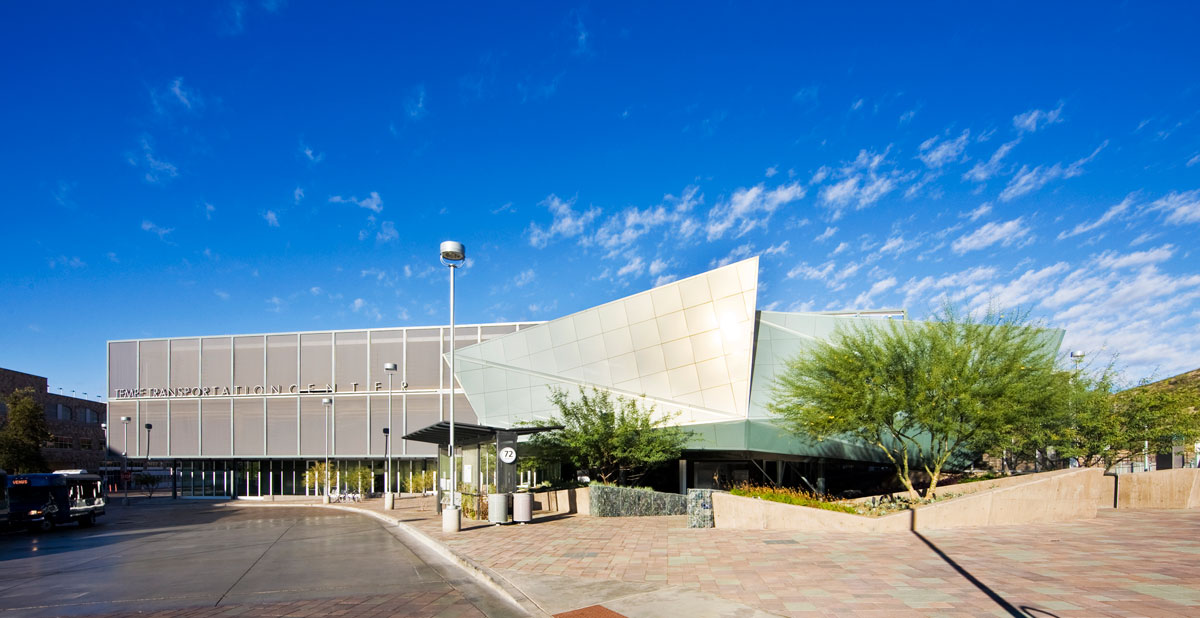
Transit stations are historically high trafficked areas, often seeing hundreds of commuters on a daily basis. Additionally, these buildings are expensive to repair as construction can require costly closures. Often architects specify high performance coatings systems for their architectural components to ensure both the longevity and aesthetic quality of their designs.
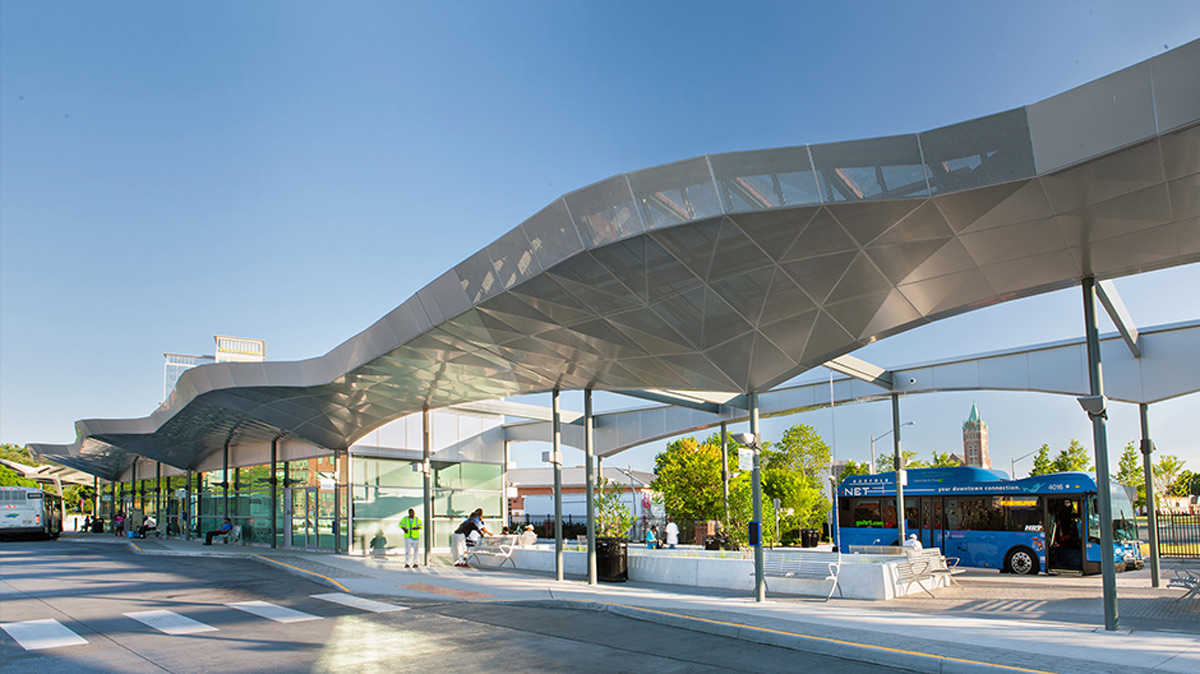
image ©ALPOLIC
The Hampton Roads Transit (HRT) facility in Norfolk, Virginia features a progressive design by Tymoff+Moss Architects. The new facility for Hampton Roads Transit (HRT) replaces a 3-acre circle of asphalt that stood next to a busy road. Architects designed the new transit hub with the intentions of creating a space with a park-like ambiance; a public space that provides shelter for people waiting for their bus.
Over 1,000 ALPOLIC® panels were used for the transit center’s roofing; the metallic panels are coated in Lumiflon FEVE resin. The inside of the waiting station uses Valspar’s Valflon, which also employs Lumiflon FEVE resin technology. The next-generation fluoropolymer provides coatings with super-durable coverage that will last under intense weather conditions without sacrificing the color and gloss of a coating.
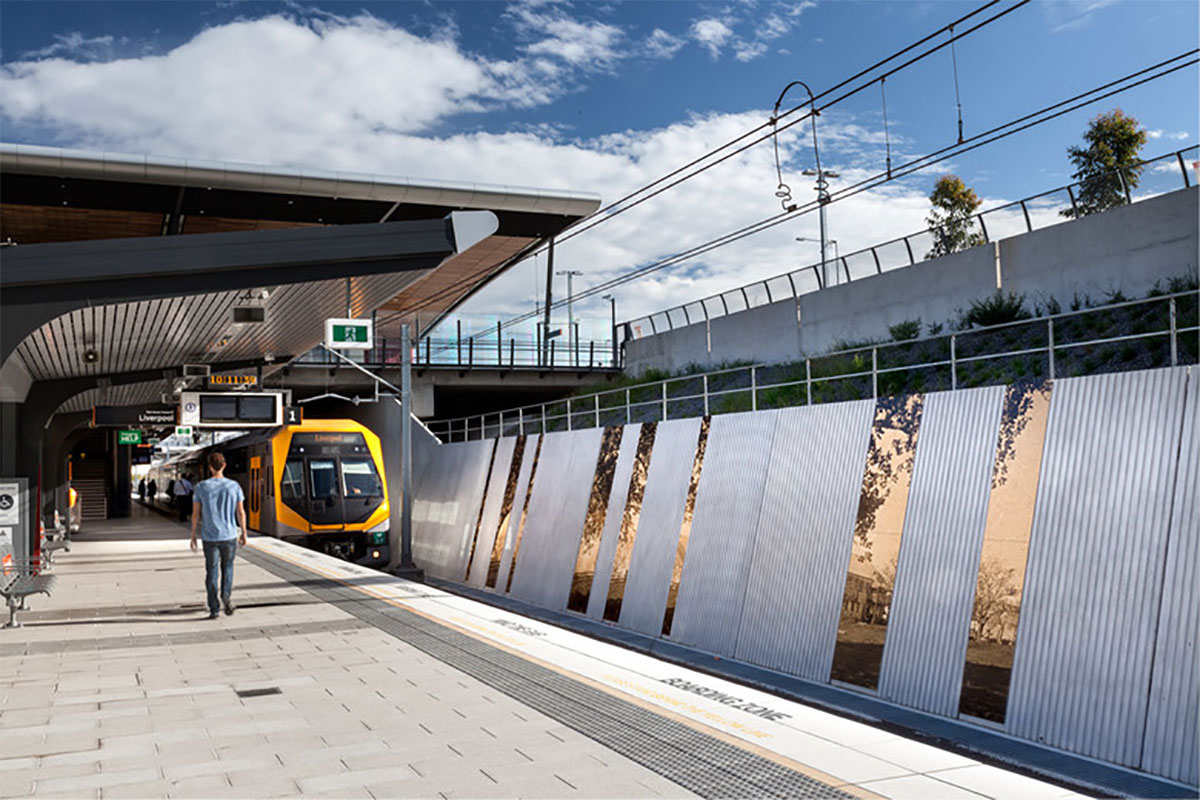
image ©Vitragroup
Along the walls of the Edmondson Park Railway Station in Sydney, artwork depicting the area’s cultural landscape can be seen. The works of art were part of a project headed up by KI Studio in collaboration with heritage consultants at AMBS. Sepia-toned photographs which display enlarged historical photos of the Sydney suburb are presented on large strips of fiber cement. The panels, provided by VitraGroup, were custom printed for the project.
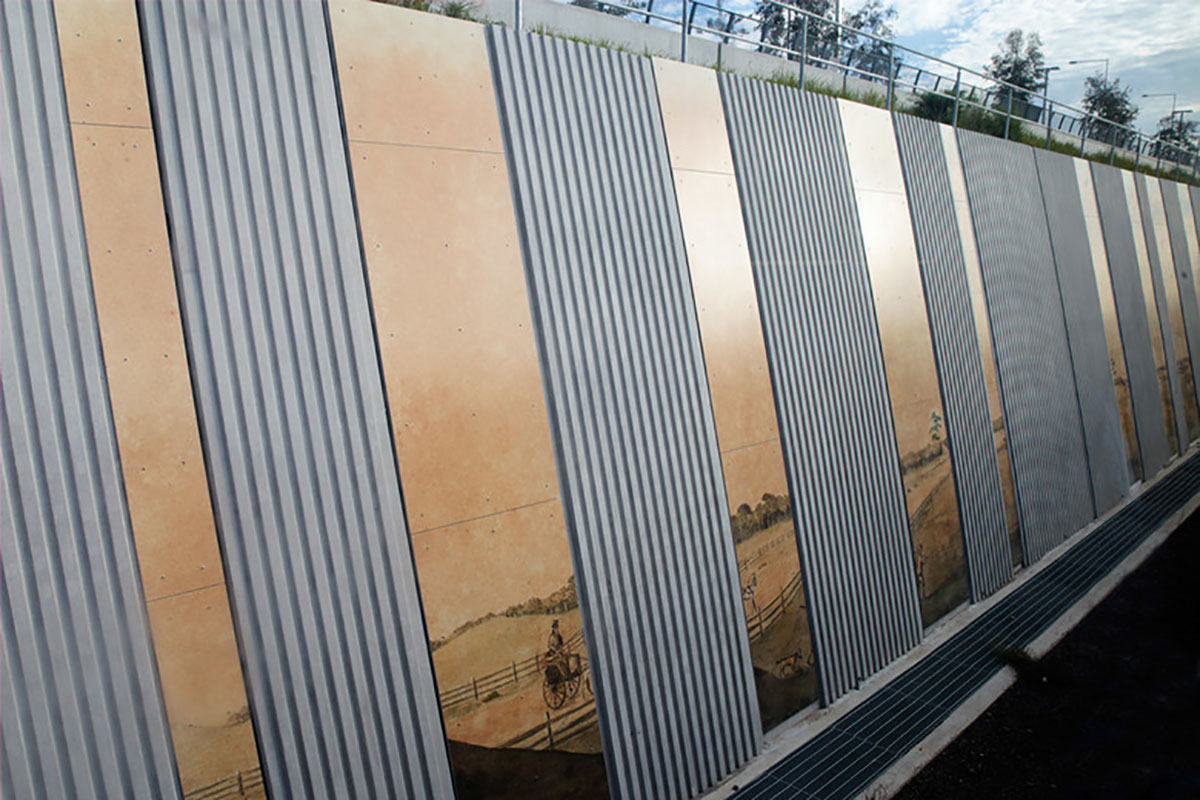
image ©Vitragroup
VitraGroup’s fiber cement panels, VitraPanel, employ A&I Coatings’ Vitreflon, a low-VOC fluoropolymer that features Lumiflon FEVE resin. High-performance coating systems that contain Lumiflon FEVE resin offer architectural surfaces a plethora of different benefits, all of which ultimately help maintain the structural integrity of the coatings.
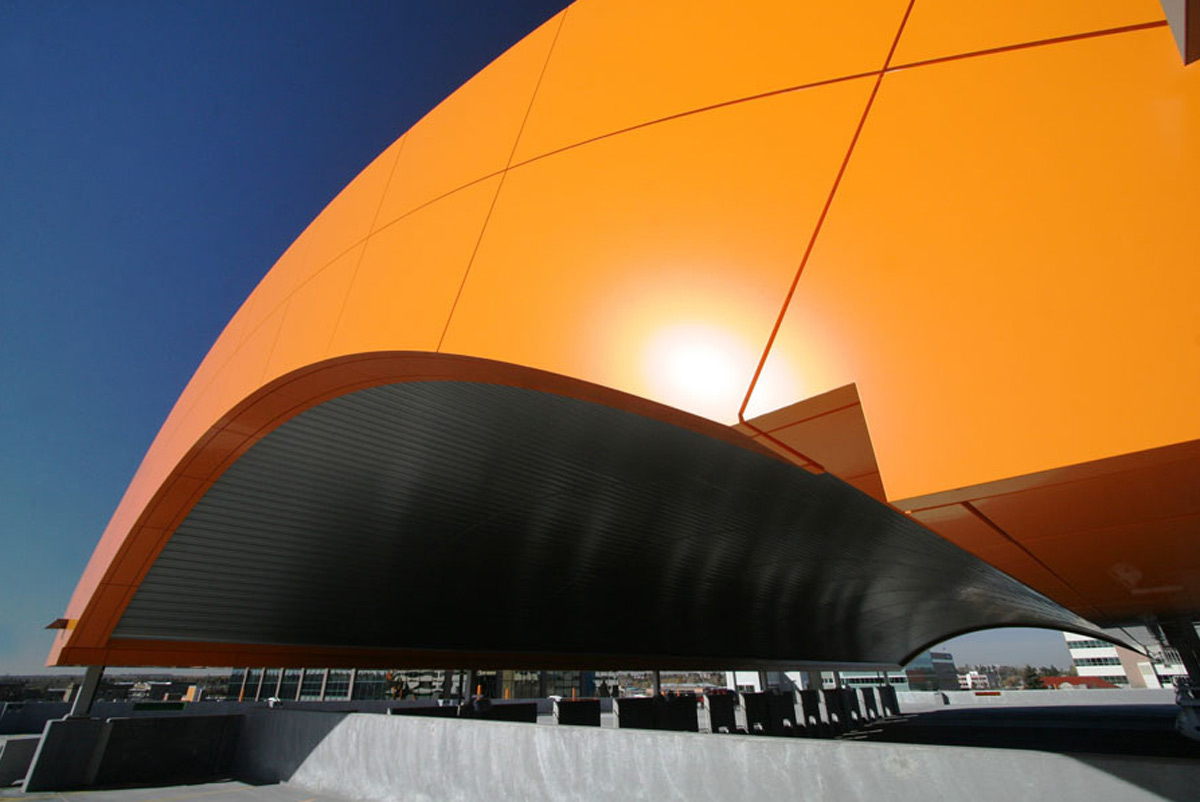
image ©ALPOLIC
The Sorensen Station Parkade and Transit Terminal in Red Deer, Alberta, Canada is a development named after Gordon Lloyd Sorensen, the man who developed Red Deer’s first transit system in 1957. The parking deck offers residents and businesses over 300 parking spots in addition to 100 daily spaces; the space also contains a Transit office, kiosk rentals, public restrooms, and a customer service center.
The radiused roof panels are made up of Prismatic-finish ALPOLIC®/fr ACM panels, which are also installed along the sidewalls of the structure. Architect John Murray Architectural Associates Ltd. of Red Deer, Alberta chose the colors from ALPOLIC®’s Prismatic line that were used for the project. The architects selected the Prismatic color line because of the color-changing appearance of the ACM that enhanced the aesthetic of the parking deck.