Coating specifications help engineers and architects set standards for how surface finishes should perform on structures like bridges or buildings. Rather than naming a specific brand or product, performance-based specifications describe what coatings performance needs, such as keeping its color and gloss, resisting wear and weather, and meeting other critical performance parameters for architectural applications.
For example, brightly colored architectural features require coatings that retain their vibrancy and hue over time, even in harsh environments. When writing specifications, it helps to choose the resin chemistry of the coating system that gives the needed performance and finish. This way, stakeholders and owners can clearly state the required qualities and refer to the chemistry that provides them.
In architectural coatings, common coating resins include polyurethanes, polysiloxanes, one-component acrylics, super-durable polyesters, PVDF and FEVE and potentially other factory applied or air-dried systems. Knowing how these resins work helps professionals choose coatings based on factors such as durability and life cycle.
Performance is especially important when selecting a resin. Fluoropolymers, for example, are often preferred in architectural coatings for their exceptional weather resistance, UV stability, and long-lasting color and gloss retention.
PVDF vs. FEVE Resins
In the fluoropolymer market specifically, two resins are commonly used:
- PVDF (polyvinylidene fluoride): Known for its very strong carbon-fluorine bonds, PVDF offers excellent chemical and UV resistance. Architectural PVDF coatings typically come as a blend of 70% PVDF with 30% acrylics to balance performance and workability.
- FEVE Resins (fluoroethylene vinyl ether): Combine fluoroethylene and vinyl ether in alternating patterns. This gives them higher-gloss finishes than standard PVDF and allows for more flexible formulations. By tailoring the vinyl ether monomers, allows for customization of aesthetic properties such as gloss, flexibility, hardness, adhesion, pigment compatibility, and transparency as well as functional properties linked with the ability to crosslink during the curing process.
Choosing between PVDF and FEVE depends on both performance requirements and aesthetic goals. PVDF is typically in factory settings, onto coil coating on metal architectural panels, which requires high-temperature processing in a manufacturing plant. In contrast, FEVE resins can also be applied in factory settings, both powder and liquid, but can also be applied and cured at ambient temperatures, making them suitable for field-applied coatings (on-site) onto architectural surfaces, restoration projects, bridges, and concrete.
Growing Popularity of FEVE Resins
FEVE resins are in demand in the market, driven by increasing demand in both architectural and automotive coatings. Its exceptional durability, color retention, and UV resistance make FEVE especially desirable for exterior applications where long-term performance is critical. Ongoing innovations are improving FEVE performance and cost-effectiveness, further supporting this growth.
LUMIFLON FEVE Resins Are a Stand-Out
LUMIFLON FEVE resin technology, for example, offers advanced resin grades, enhanced powder-coat compatibility and environmentally friendly low-VOC/no-VOC formulations. Developed by AGC Inc., it is the world’s first readily solvent-soluble fluoropolymer. Its natural, transparent and high gloss make it an excellent choice for bright, bold colors and striking metallic finishes.
LUMIFLON FEVE resins have been tested to meet AAMA 2605 FEVE-architectural specifications, which require at least 50% gloss retention after ten years. Pigments in red, yellow, green, blue, and violet—whether in mass tone or tint—have passed 10,000 hours of accelerated weathering, demonstrating long-term durability and color retention.
The technology supports an extensive range of coating palettes and is available in solvent-based, powder, waterborne, and low-VOC HAPS-free solid resins. This versatility enables formulations for a wide range of architectural applications such as:
- Window frames
- Curtain walls
- Exterior panels (ACM/MCM/metal sheet)
Compared with traditional coating systems, LUMIFLON resins maintain gloss and color for 20 to 60 years, which is much longer than other coating types. This extended life cycle reduces the need for recoating, reduces the maintenance frequency and lowers long-term project costs.
LUMIFLON Innovative Projects
Notable architectural projects featuring LUMIFLON include:
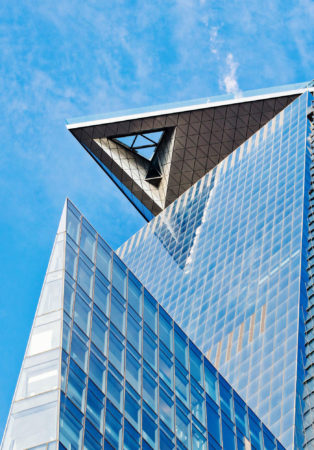
30 Hudson Yards, NYC
The exterior of this 73-story New York City tower is protected from the elements with AkzoNobel’s Interpon D3000 Fluoromax, enhanced with LUMIFLON FEVE resin.
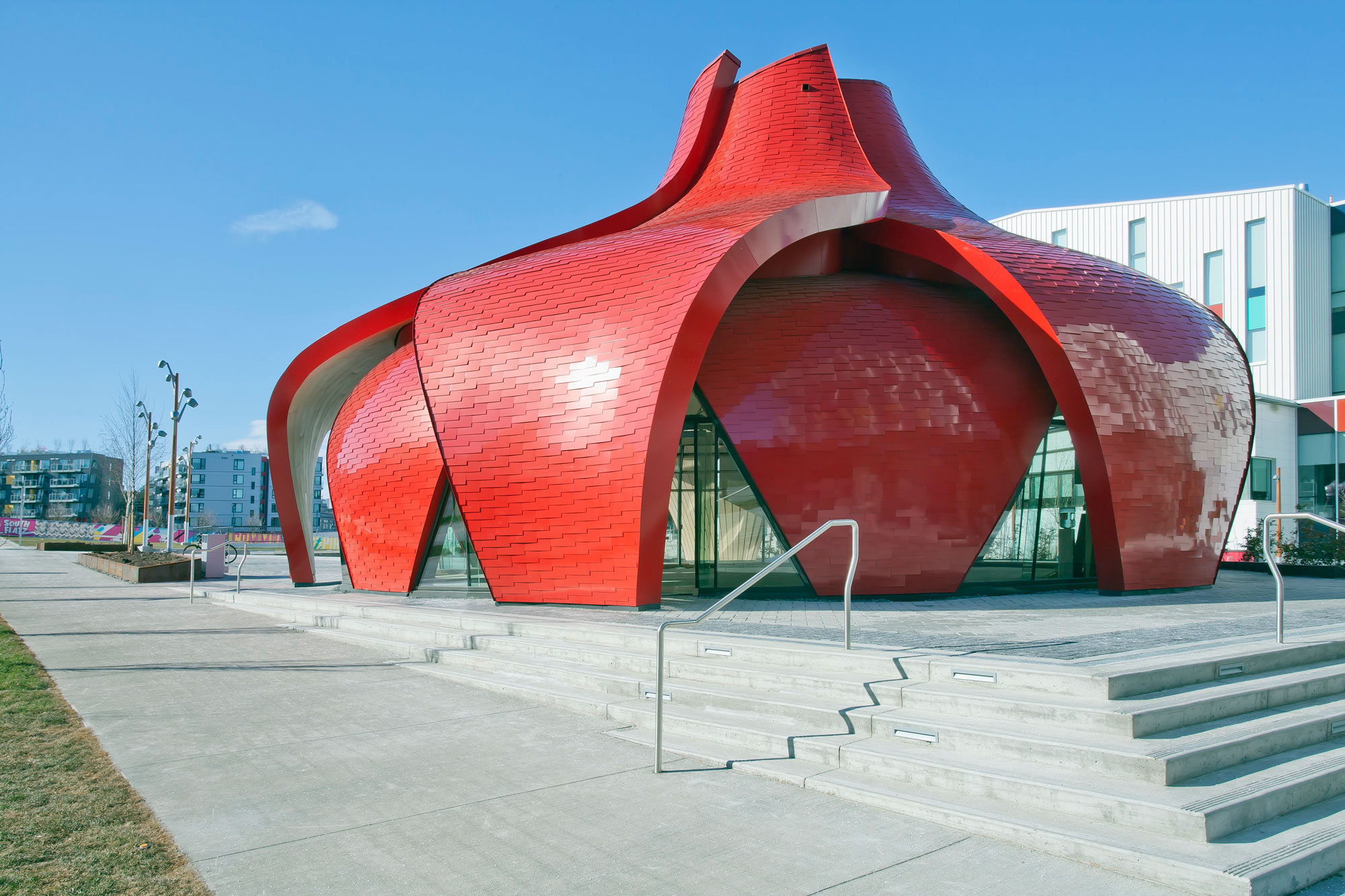
565 Great Northern Way and Pavilion, Vancouver
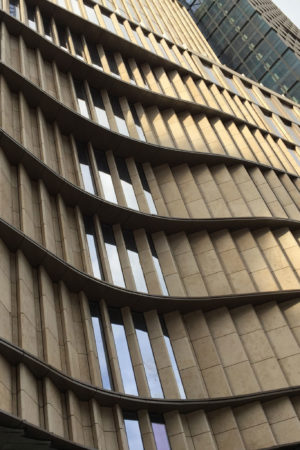
This commercial and retail development features a seven-story façade and one-story retail pavilion with a striking bright red exterior. ALUCOBOND® PLUS Spectra panels on the project use a Lumiflon FEVE fluoropolymer resin topcoat.
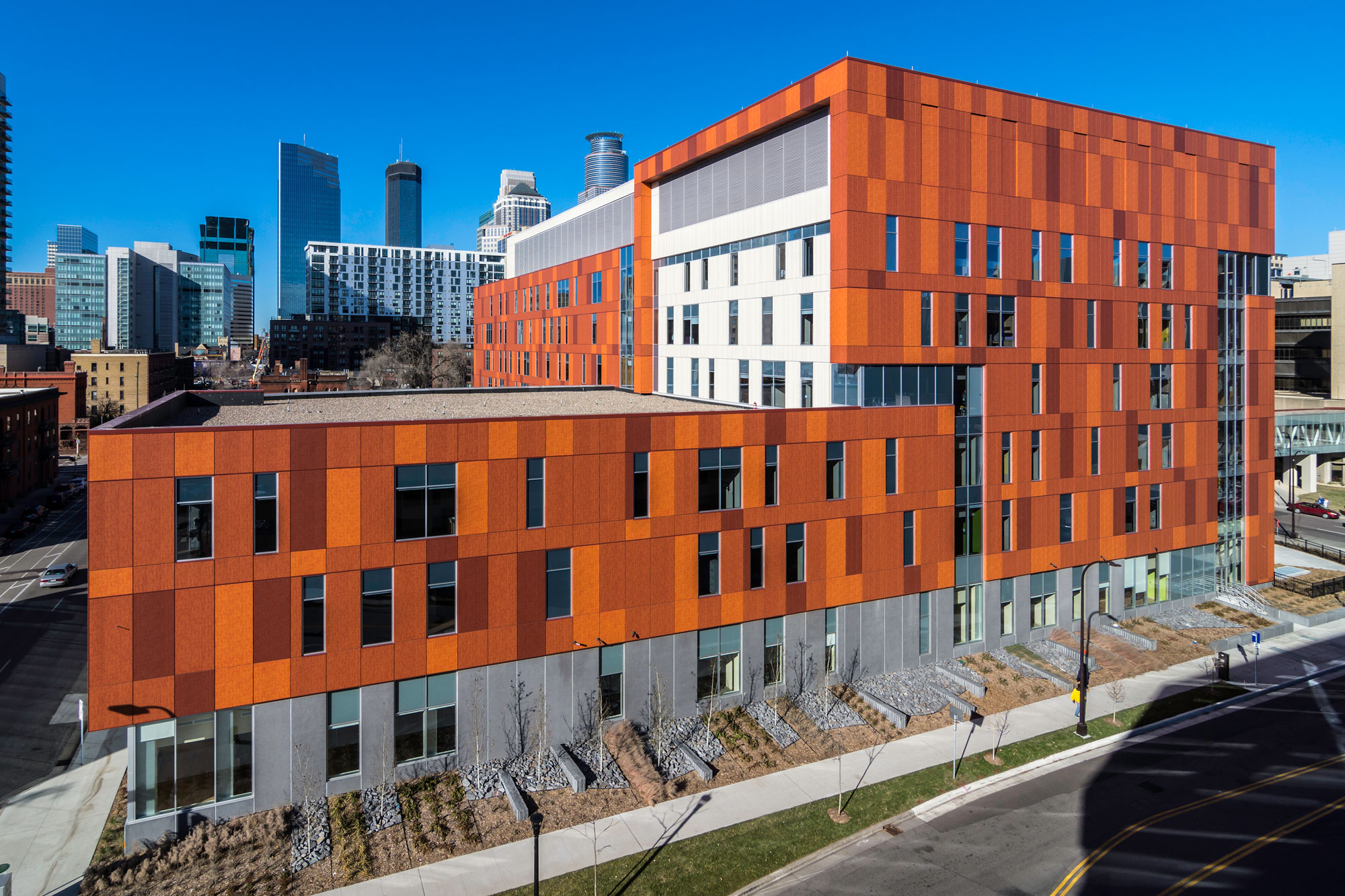
Hennepin County Medical Center, Minnesota
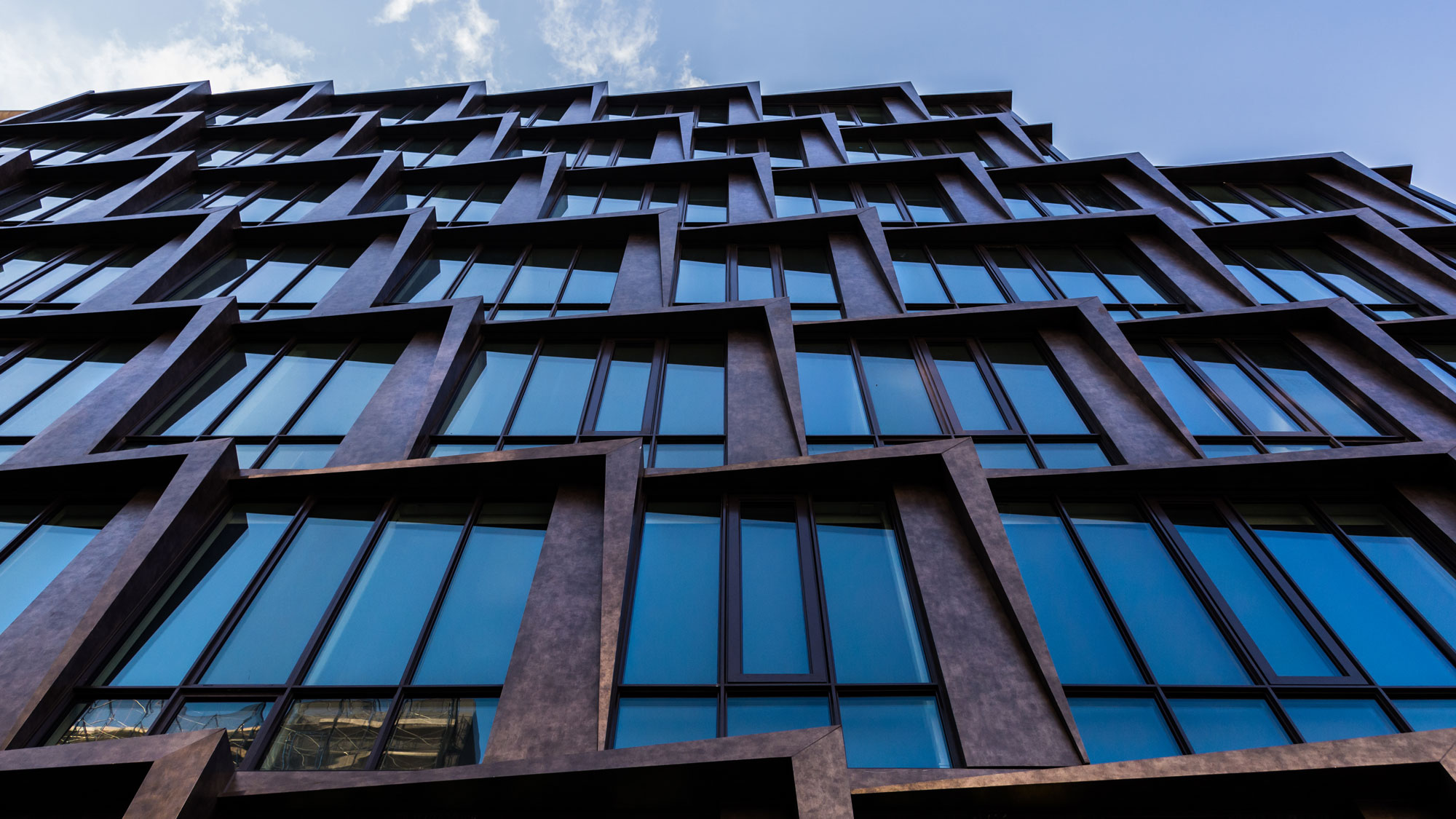
The newest addition to this medical center showcases a unique patterned façade metal coated with Lumiflon, an ideal choice for buildings exposed to harsh conditions.
Additionally, the specification may differ based on whether the coating is factory or field-applied. There are different types of coatings that are used within those applications. Factory application allows the usage of heat, which allows the use of powder coatings. These coatings require heat to cure and special spray equipment that is currently only feasible in a factory setting. Within a field application, the use of an oven is not available, which impacts the type of coating system available. These factors are equally important to call out in a specification.
Different LUMIFLON Grades
LUMIFLON is available in a variety of grades engineered to meet the needs of specific architectural and industrial applications. (see table 1)

Find out more about how LUMIFLON serves the architectural market.